MEME FIELD NOTES
How Kids See Us Meme
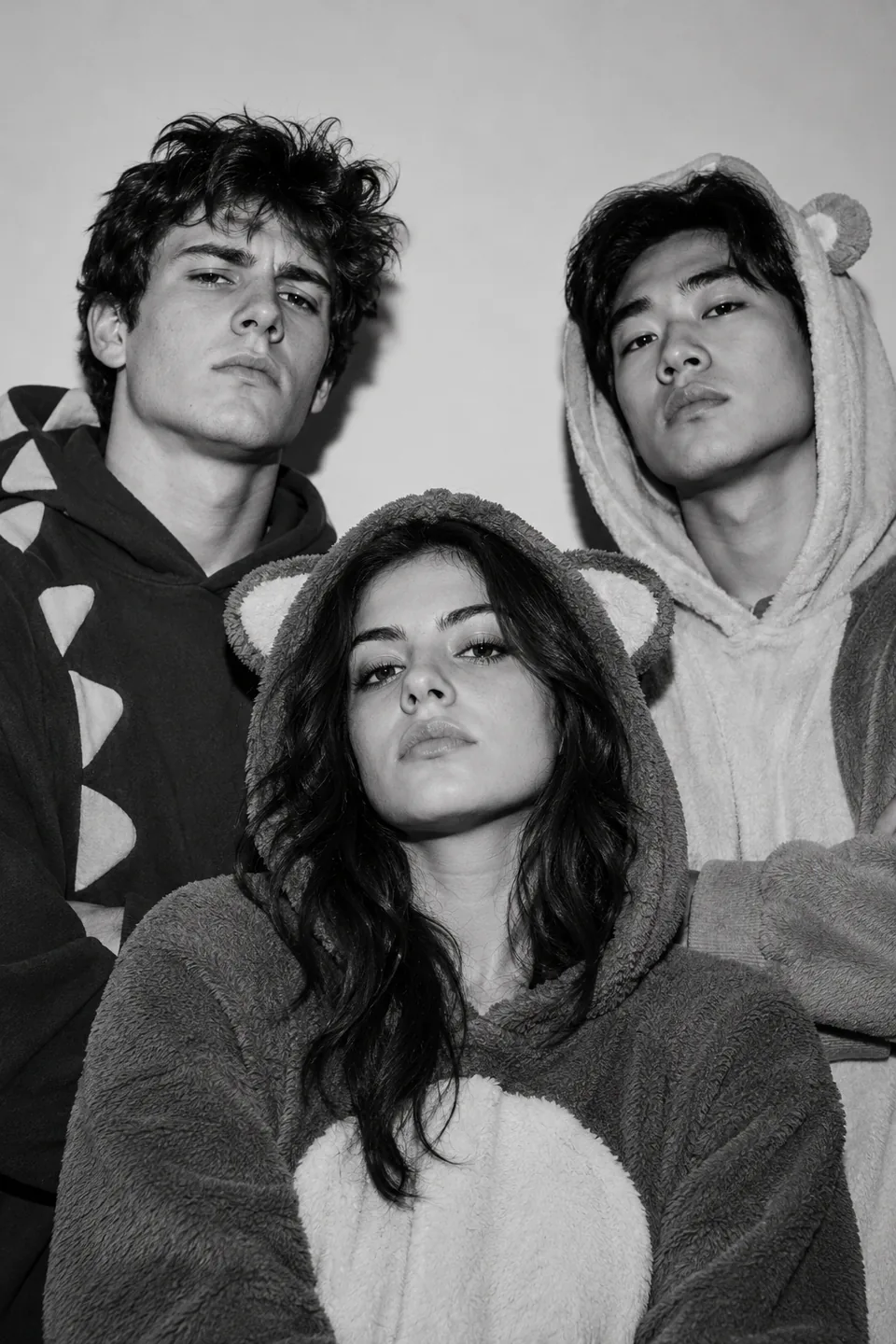
Older students pose like stern black-and-white suspects to imagine how enormous they look to first graders.
Also known as: How first graders see us · mugshot trend · how younger kids see us
TL;DR
The How Kids See Us Meme is a TikTok photo trend in which teenagers and young adults present themselves as severe, intimidating adults—usually through black-and-white, mugshot-like portraits—then caption the set “how kids see us” or “how first graders see us.” The joke is a memory of scale: when you were six, the older students looked impossibly grown up; now you are the supposedly frightening big kid even if you still eat cereal for dinner. Early examples appeared in September 2026, and the monochrome lineup quickly became the format’s standard look.
What does How Kids See Us Meme mean?
The How Kids See Us Meme is about the moment a person realizes they have crossed to the other side of childhood perspective. An eighteen-year-old may feel uncertain and unfinished, but a first grader sees height, a serious face and the mystery of somebody allowed to go places alone. The portraits exaggerate that mismatch until an ordinary friend group resembles a police lineup.
Most captions name a specific age or grade because precision sharpens the memory. “How first graders see us” recalls the students who seemed ancient from the far end of an elementary-school corridor. Other posts say “just like we used to see the older kids,” admitting that the creators once supplied the same frightened stare.
The mugshot style is theatrical rather than documentary. Plain walls, direct flash, neutral expressions and monochrome editing remove the soft cues of a normal selfie. Creators should avoid real police insignia, case numbers or claims about an actual arrest; the joke only needs the visual language of seriousness.
Why did How Kids See Us Meme spread?
Nearly everyone remembers overestimating the age of older children. That shared memory lets the How Kids See Us Meme work across schools, countries and friend groups. The post does not require viewers to know a celebrity, song lyric or complicated backstory. A row of deadpan portraits and one sentence carries the full idea.
It is also easy to make as a group. Friends can take separate head-and-shoulders photos against the same wall and assemble them as a slideshow. Nobody needs to dance or act. The severe expression is funny precisely because the people pictured are still visibly young.
Large early posts established the black-and-white look within days. Know Your Meme documented September uploads with more than a million views and noted that the exact origin remained uncertain. As later creators reused the same audio and framing, the phrase “how first graders see us” became searchable on its own.
School context requires a little restraint. The format works best when older students photograph themselves and describe a memory from their own childhood. Recording younger pupils for a reaction, naming a particular child or presenting a real school corridor as dangerous adds privacy and safeguarding problems without improving the joke. A fictional lineup and a general grade-level caption preserve the perspective shift while keeping children outside the content.
Where did How Kids See Us Meme come from?
Know Your Meme lists a September 19, 2026 TikTok by @urboycontent among the earliest known examples. Its caption remembered seeing older people as “uncs,” slang for older men. A second widely viewed post followed on September 20 with a similar backward-looking caption.
By September 24 and 25, posts were using more explicit criminal language and sequences of black-and-white portraits. Those versions made the format visually consistent: serious face, blank background, harsh contrast and a caption about how children perceive the group.
No verified creator has claimed the entire concept. The safer account is that several TikTok posts converged on the same perspective joke during the second half of September, after which the mugshot compilation became the recognizable How Kids See Us Meme.
How Kids See Us Meme timeline
- Sep 19, 2026One of the earliest documented posts jokes about being seen the way the creators once saw older “uncs.”
- Sep 20, 2026A second large post repeats the idea from another friend group.
- Sep 24–25, 2026Black-and-white lineups and criminal-style captions define the dominant visual treatment.
- Oct 8, 2026Know Your Meme publishes an entry documenting the trend and its early examples.
Popular versions of How Kids See Us Meme
How first graders see us
The most common caption names the youngest school group and pairs it with stern portraits of older students.
The friend-group lineup
Each friend gets one black-and-white frame, producing a slideshow that looks more serious with every swipe.
How we saw the older kids
The caption looks backward and admits that the creators once treated ordinary teenagers as intimidating adults.
How to join and post How Kids See Us Meme
- 1Photograph each person from the shoulders up against the same plain background with a neutral, deadpan expression.
- 2Use consistent black-and-white treatment, direct-looking light and similar crops so the set reads as one lineup.
- 3Choose the grade or age group your friends actually remember; a specific caption feels observed rather than generic.
- 4Keep it fictional and avoid real police branding, personal records or jokes that accuse somebody of a real crime.
Sources and further reading
Questions about How Kids See Us Meme
What is the How Kids See Us Meme?
It is a TikTok portrait trend imagining that younger children see teenagers and young adults as huge, stern and fully grown.
What does “how first graders see us” mean?
It jokes that six-year-olds view older students as far older and more intimidating than those students feel.
Why do the photos look like mugshots?
The harsh monochrome lineup exaggerates the younger child’s imagined view of the older group as serious or dangerous.
Who started the trend?
The exact origin is not confirmed. Early documented TikToks appeared on September 19 and 20, 2026.
Does the post need a group?
No. A solo portrait works, but a sequence of friends makes the mock lineup and generational joke easier to read.